Sunday, February 1, 2015

When Family and Friends Don't Believe You

I've always said that dealing with Lyme Disease physically is only half the battle with this illness, the other half derives from dealing with society's perception about your disease. But for many, society's perception also entails dealing with their own family and friend's perceptions with Lyme. I had written a piece a little while back that was directed towards loved ones of those afflicted with this wretched illness to help them empathize and understand your daily struggle. However, for many, there will be a few people within your life who refuse to educate themselves on Lyme, leading them to becoming indifferent to your illness or even sometimes downright hostile. There will be a few Lyme patients out there who will receive all the support they could ever want from those around them, but that tends to be the exception and not the rule. Learning to emotionally cope and eventually ignore the hurtful noise surrounding you is an essential and necessary part of your recovery. Luckily from my own experiences and others, there are a couple strategies that may help you cope.


First off, if your family or friends have mocked you or made you feel like your illness is insignificant you are not alone. Sometimes it actually helps to take solace in the fact that the misunderstanding you're experiencing from loved ones is not an isolated incident within the Lyme Community. I myself had fortunately experienced great support from friends when explaining my illness to them. They all seemed to be genuinely interested in learning about my condition and why I suddenly became bed-ridden. It also helped that my illness was visual, as the dramatic weight loss I experienced clued everyone in that I was not well. However, I'll be honest in saying I didn't initially experience the support I was hoping for within my own family. 

I'm an only child and have lost contact with any extended family outside of my parents. My parents knew I was ill at first, and went to great lengths to try and find answers to my condition. It took six months of being extremely ill before I was diagnosed with Lyme Disease. Upon the diagnosis my mother related my case to a friend who's husband had Lyme and how he fully recovered from Lyme within six months. She seemed certain I was destined for the same recovery, and my dad went with her assessment as well. I was extremely ill though, and could do nothing but stay on my computer throughout the days. I would constantly research my illness to learn as much as I could in the hopes of gaining an advantage towards my recovery. My parents didn't necessarily agree with my approach and at time would mock me and constantly make fun of the time I put into researching. 

It was hurtful, but what had hurt even more was hearing my mother on the phone with her friends comment about how I had no life now as if it were somehow my fault. Not getting better within the first three months didn't help my case of seeking emotional support. My father had made a comment that he no longer believed I had Lyme Disease and had even entertained the idea from a friend at one point that my condition was due to a mental illness. We sought out a second opinion at the Mayo Clinic together as a family. When the initial results for cancer after a myriad of tests came back negative, I confessed that I felt the Mayo Clinic would have no answers due to the fact I had Lyme Disease. He scoffed at that notion and then berated me for being so negative. Eventually I was right and Mayo sent me home with the CFS diagnosis we're all so used to.


Are my parents evil, maniacal people? No, they're not in the least bit. Were they stubborn, difficult and even a bit unsympathetic at times? Yes, without a doubt. The awareness behind Lyme Disease is in its infancy stage, and due to the limited understanding about our illness it takes extra effort on your loved ones part to learn about what we're dealing with. The fact that Lyme awareness is so low can be used as a scapegoat for family members who are afraid to accept the enormity and seriousness of your disease, as I expect was the case with my family. However, after a year they finally did come around when it could no longer be ignored. They weren't bad people who didn't care about their son, but since no parent wants their child to be very ill it became easy for them to hide under the cloak that society had put out that Lyme wasn't serious.

Unfortunately, not everyone's family will even handle it in the fashion that my parents did. My girlfriend deals with this illness as well, and though her parents have always remained supportive, the same can not be said for some of her friends and certainly not for most of her extended family. Some of her aunts' refused to even accept the notion that she was sick. When she would post pictures of us on the rare days she felt well enough to go out to dinner her aunts' would mock her and discuss how she was going clubbing and being promiscuous. This was hurtful, especially due to the fact she had a hard time getting out of bed, let alone finding the energy to somehow go clubbing. She would constantly try to explain to them what she was dealing with, but it often went in one ear and out the other. They treated her essentially as if this disease was a hoax, and would say disparaging things about her that no family member should ever hear. When one of her cousins was diagnosed with Irritable Bowel Syndrome the family rushed in to aid her cousin and acknowledged and empathized with how sick he was. But she's never received even a fraction of that empathy throughout the duration of her struggles with Lyme Disease.

It can be lonely and disheartening when you're going through relative hell and those people you cherish don't take you seriously. However, we've both found strategies to cope and though its not perfect, there are ways to better your outlook on the disconnect you may experience with those you love, and sometimes there are strategies to even help them understand more (though that's certainly not true for everyone). 

First off, as difficult as it may seem, over time you will have to learn to purely block and ignore the negativity that surrounds you. It won't come overnight, but it will happen if you continue to work at it. More than anything else you must accept the fact that you're seriously ill and the struggle you endure every day is very much real. Though it would be great to have the support from those you love, it may not come and that will be ok. You know how serious your situation is and that's what matters.

Second, make sure to utilize the Lyme Support Groups that are out there. This sounds easier than it actually is and I'll explain why. Lyme support groups, especially those that are online, can be very negative places sometimes. Those that hang out on those groups often tend to be the ones that have remained ill for awhile and could have a very negative outlook on their situation. Though they may need help and support, it's also important that you are in a good place as well. Sometimes, that means excluding yourself from as much negativity as possible. My personal suggestion would be to find just a couple of other Lyme patients through these groups who you can relate to and keep in touch with, who tend to have a positive outlook on their illness. No, everyone isn't always going to be filled with positivity every day, but it's important that they're not actually going to try to weigh you down. Online groups can be good for this, but try to find someone who is also within your zip code so you potentially have a person you could even meet up with at times so you have someone who understands you. Sometimes, in person support groups can be better for this, so try to find one near you. 

Third, I feel its important not to over-saturate social media with negative comments about your daily life and your illness. Yes, it's good to be open and honest with your friends about what you're experiencing but you can certainly overdue it to the point where they question the legitimacy of Lyme. These words sound harsh, but I have seen it happen. Though the conspiracy theories about this illness and how it originated may be true, it won't benefit you very much by continually voicing these things in a public setting. Do your best to convey your thoughts and feelings, but in a very calm manner. If they tend to not fully take to what you're explaining don't chastise them for not being understanding. You will likely have to just let it go, and maybe they'll be ready to take in what you have to say at a later time, but arguing with them about it will only turn them off from ever trying to learn.

Lastly I believe it's vital the you seek out therapy while you're on your path to recovery. Journeying through the road to wellness with Lyme Disease is one that will take you through an emotional whirlwind. Those close to you will often be unable to fully cope with what you're experiencing physically and mentally. I'd advise doing your best to seek out a therapist who is familiar with Lyme, or at the very least someone who is familiar with illness. My therapist didn't know much about Lyme Disease but did have a husband who had battled through stage 4 cancer. She actually became my number one support system, and I can honestly say I would not be here today without her guidance. Every week I would walk in with what felt like multiple boulders on my back, only to have them slide off of me by the time our sessions were done. You need someone who you can just vent to and get out the array of emotions this illness will take you through.


The message is that though it's hurtful to have friends and family neglect your circumstance, there's some positives that will come from this. You will forever know the true colors of those in your circle. This is the perfect time to see people for who they really are, and when you overcome Lyme Disease you will be better off without those people in your life. All you need in this recovery is your own confidence and positive outlook, along with just one person who you can talk to. Once you find that one person you can come to, then you're on your way to wellness.

Monday, January 5, 2015

Biofilm: The Shield for Lyme Disease That Can't Be Ignored

Throughout treatment for Lyme Disease and Co-Infections many people will find themselves at an impasse. They will hit a wall in which their recovery stagnates, no matter the amount of medications they take. It's a very difficult part of this process, and was hard for me as well. What's important is for your LLMD to really reflect and analyze your case and figure out that cause for your inability to get better. There could be a number of factors, but for many, like myself, it could be the biofilm that the illness has created for itself that won't allow medications to penetrate the disease.

What is Biofilm?


I always preface this by saying I'm not a doctor, but through my own reading and experience I'll do my best to summarize for other patients. The Biofilm is essentially a house the disease creates for itself. They will secrete a slimy substance in which they will all congregate and hide in. The slimy substance that is the biofilm will create a barrier in which the medicine you take is unable to get to the spirochetes or co-infections its targeting. More than 75% of infections carry a biofilm component and according to Fry Lab's it's estimated that 80% of Lyme patients have a biofilm component to their illness. It almost seems like a scary science-fiction film that an illness is capable of creating a shield for itself where it can congregate and multiply without worry, but that's essentially what happens.

How Did This Affect Me?

Addressing biofilm was a main factor in me pushing through the wall I hit in my recovery. At one point I had been doing better but my progress had stagnated for almost six months. I was on IV antibiotics and no matter how much I took I would have absolutely no reaction to them. That can be good or bad, but for my case it wasn't a good sign. At least a little bit of herxing is good as it signals the illness is dying. But if you're not feeling better and you're not reacting to medications in any way, its not a good sign. My LLMD at the time had suspicions that the majority of my illness had basically created itself a house that is the biofilm, moved in there, and refused to leave. I could take all the antibiotics in the world but it wouldn't matter as long as they still had their biofilm to protect itself from.

It's weird to talk as if these things are intelligent species. But throughout my own research and experience, this illness is extremely complicated and smart. It knows how to move throughout your body and absolutely confuse your immune system. The fact that it can signal to one another to hide behind a biofilm it creates to continue their own survival is just eery, but it's exactly what they do.

I had been on a supplement for biofilm when I first got sick called Interface Plus but I had no reaction to it. A year later my doctor told me that he had a protocol that would really get at it. He gave me supplements called Xylitol and Lactoferrin. Xylitol is simply a type of sugar that you mix with water and Lactoferrin was given in capsules. I hadn't felt a reaction to any medication for six months when I started the protocol, but the first day I took Xylitol and Lactoferrin I found myself shaking in my bed, feeling as if I had been hit by a truck. I was enduring a severe herxheimer reaction. The biofilm protecting this illness was dying, but it wasn't an easy task eliminating it. The protocol had opened up the illness, and the medications that I had no reaction to, I now became overly-sensitive to. It was a good thing though. I could now treat Lyme and its co-infections effectively, and after the biofilm protocol I saw symptoms disappearing that I had foe years due to the elimination of this illness' shield.


The moral of this post is to research the possibility of biofilm housing your illness if you haven't found an effective solution to break through the wall you've encountered in your recovery.  Eliminating the biofilm could be the most important process in regaining your health from Lyme Disease and everything else that comes with it. If you don't address the biofilm you may find yourself forever unable to recover from the disease, its the sad truth in dealing with an enemy and invader within your body that is intelligent as this one. Feel free to comment if you have questions or would like to place your input on this topic.

Sunday, December 14, 2014

Caring for a Son/Daughter with Lyme

I had recently written a post about what to expect when a loved one has lyme disease, but the relationship between a parent/caretaker with a child or teenager infected with Lyme Disease carries a very unique dynamic that I felt like deserved a more in-depth analysis. I was never a parent in this situation but I have been the young adult that needed to rely on his parents for the most basic of things while I was ill. It was a difficult time, and though my parents certainly tried their best, it wasn't easy as there's no manual or guidebook out there on how to care for one with this insidious illness. I can do my best from relaying my own experiences and what I've witnessed with other families on how to care for your child through a very difficult time for your entire family.

Before we delve into caring for your loved one, we need to establish the harsh reality behind this illness. If you cant accept this, than unfortunately there's no point in you reading anything else beyond this. Your child is likely very sick and you've probably jumped around to a million different doctors in an effort to obtain a diagnosis. As most families who go through this, the possibility that your child isn't even ill and this disease is all in their heads has possibly been offered by at least a few doctors. At one point you may have even acknowledged the very possibility that this really is psychological and not physical. Right now, for the sake of your child's life, you need to accept the fact that conventional medicine has let you down and is wrong. I know that theres a good chance that you may have never been let down by your family physician before, but unfortunately there's a first time for everything. I can go into why the majority of the medical community continues to deny the existence of the later stages of this illness, but its too time consuming and will likely be covered in another post later on. For now, you need to accept that your child is very sick and there likely isn't any help coming from your regular team of doctors. You need to find them a Lyme-Literate Medical Doctor who knows how to treat tick-borne diseases. Do not go to the local naturopath where lyme patients make up two percent of their practice, go to someone who focuses purely on treating Tick-borne illnesses. Also, keep an eye out for quacks, because though most Lyme doctors are well intentioned you will run into ones who are in this purely for themselves. If a doctor is jumping to a Lyme diagnosis with literally zero evidence and trying to sell you tons of supplements that they manufacture themselves in their back office, it may be time to look elsewhere.


One of the hardest parts of dealing with this illness is the isolation that it will bring, and that's devastating for someone still in their adolescence. This should be a time when your child is growing and making friends, discovering who they are, and learning the morals and values that will allow them to become the person you want them to be. This can and will still happen, but it'll be through a different path than most and will require more guidance from you. Most children or teenagers have a number of different outlets that cultivate them and grow them into the person they'll become. Sure, their parents have a part, but their friends in school have a huge impact, as well as the extra-curricular activities they take part and just being out there in the world. The access to all those avenues to grow may be temporarily cut off from your child which will make it harder on them. You will have to take a more active-part in your child's life by not only providing the care they need, but also being there for emotional support and being their major source for socialization. Sometimes with teenagers, its not your responsibility to necessarily be their friend, but while they're sick with Lyme, you'll have to make a greater effort to really connect with them.

That's the tragedy for the younger fighters, it's the time lost. Lyme usually takes months if not years to recover from, and there's really no shortcuts with this illness. It will likely leave your child bedridden at times and unable to go to school. Due to this it can create a trap in which those with the illness are forever stuck in the age that they became sick at, living out a peter-pan type of existence. It is paramount that you never let your loved one become complacent, and that you continually try to push their development forward. I know from my personal experience that I left my parents home at eighteen, and when I left I was very immature and constantly found myself getting into trouble. When I returned home, sick with Lyme at twenty-one, they still treated me like the child who left their home a few years earlier, though I had grown exponentially since that time, traveling, and doing well in my studies and work. Over the next couple years while I recovered from Lyme and remained in their house, they continued to still treat me like the young kid that never grew up and I started to find myself regressing back to that person. It wasn't intentional on their part at all, but it definitely did create a divide in the relationship. Though your child may have gotten sick at twelve or thirteen, if they're sixteen now, its of extreme importance that you hold them up to the standard and accountability of a normal sixteen year old. It's difficult, and it may take time to strike that balance of still caring for them while pushing them a bit, but its very important that you continue to at least make that effort.

There will also be times where your child will become completely overwhelmed with their situation. Its a hard concept to grasp that the world around them moves along as if everything is alright, while theirs is at a complete stand-still. No one could ever expect to deal with an illness of this magnitude, and certainly no one at such a young age. More than anything, they will need someone who is there to just listen to them sometimes. They won't always need a pick-me up or a lecture about toughing it out. Sometimes they just will want you to lend your ear so they can vent. It'll be the perfect time to pull back and listen to your child. That's also what will make this experience much easier, if the two of you remain transparent with one another and continually listen to what the other has to say. Lyme Disease is something that affects everyone differently so the only way you can ever fully understand what your child is going through is to take in everything they tell you. Also, whatever you do, try not to complain about how hard this is on the family in front of them. It may sound like common sense, but it can be easy to become overwhelmed and take your frustrations out in an unproductive manner. Don't ever lament to them the financial struggles that have been incurred due to their illness, they feel bad enough about becoming a burden on those around them and they certainly don't need to continually hear an exact number on the amount of money you've spent on their treatments. If you're trying to connect with your loved one, this certainly isn't the way to go about it.


One last thing I want to throw in there is that you should watch after your entire family. I suspect that a good amount of you have other children who are in good health. Its important that all your energy isn't poured into your child with Lyme. They will certainly need more of it than usual, but you cant forget about your other loved ones. I feel its very productive from the beginning to still take an interests in your other childrens' life but to also be upfront with them that the reality is you have to pay greater attention to their brother or sister but you will still remain an active-part in their life and love them. If you focus all your attention on your child who's ill, it may create tension between the siblings and everyone will be worse off. Once again, this illness is a balancing act, and it'll take time but eventually you'll be able to figure out the appropriate balance within your family.

There you have it, its a hard road ahead, but one that if handled well, will leave you with a long-lasting strengthened relationship with your child. I've seen parent-child relationships come out so much better at the end of this difficult time. It's important to know that though your child may behave differently now, whether its brain fog, mood changes, or the terrible fatigue that consumes those with Lyme, they're still that same child you always knew and what they're going through isn't their fault at all. Its a tough illness, and a hard interruption in their childhood years, but they trade off for some of those adolescence experiences they miss for a hardened toughness that will help them on later in life. It's up to your loved one to decide whether that's a fair trade off, but a stronger relationship between the two of you will certainly be a positive they likely wouldn't trade anything for.


Saturday, December 6, 2014

Co- Infections: The Possible Disease Behind the Mask of Lyme

When people often ask what I'm sick with, I'm very quick to rebut with  Lyme Disease. But in my head, I know I'm lying. At one time I truly did believe that Lyme Disease was the invader that was cruelly robbing me of everything that made me who I am, but now I know better. Lyme was merely a mask, a facade, it was a name that was hiding the real monster beneath everything, running rampant throughout my body. I could treat Lyme Disease all I want, but it wasn't until I dug in and went after the real enemies that my improvement occurred. I may say that I'm sick with Lyme Disease, but the truth is I'm sick with Babesiosis and Bartonellosis and there were times I felt like these two would kill me.

I'm not a doctor, so if you're looking for a scholarly argument on the effects from Co-Infections you should look elsewhere. All I can really do at this point is relate my experiences with my illness to hopefully help those who are reading this. If I would've had this information earlier it would've likely expedited my recovery process a lot. That's what this is about, sharing our stories to give others a better starting point, a leg up so to speak. To be fair, there's a reasonable chance that it really is Lyme Disease causing your symptoms, but you must also at least look into the possibilities of co-infections. I'm not an LLMD, but thats what's been relayed to me from more than a couple Lyme Literate Doctors. 

A huge issue within the Lyme Community is the constant battle with the IDSA. Among many of their arguments is one that people thirty years ago recovered from Lyme remarkably well with just a few weeks from antibiotics, so why would it be different now. And they're right, sort of. Lyme patients did recover at a more successful rate when this illness was first discovered, so it shouldn't be different now, but unfortunately it is. That's because we're not just dealing with a single entity now with this illness, its a multi-faceted monster. There's no official statistics, but it is believed the rise in co-infections since the discovery of borrelia is exponential. As Richard Horowitz has stated, with this illness you now have multiple nails lodged in your foot. If you treat solely Lyme, you're only removing one of those nails, is the patient really going to be in that much better shape with all the other nails still stuck in their foot? If you haven't picked up on it, the co-infections are those other nails.


There were two reasons why I was able to improve and that's treating biofilm and treating my co-infections. The biofilm will be covered in another piece later on, but for now we'll focus on my history with these bad boys. When I was first diagnosed by a naturopath she mentioned that with my symptoms I probably had Babesia and Bartonella, but I ignored it. My test results were positive for Lyme, I didn't care about these supposed other infections. I remember hearing everyone say they had these, so I blew it off entirely. She tried treating me for them, while still mainly focusing on Lyme for three months but due to my stomach not absorbing medications at any point, nothing happened. 

My next treatment would be Envita, which was comprised of mostly IV medications. The doctor there didn't even test for co-infections nor seemed to really care. He kept saying that the treatments covered all infections so I shouldn't worry much. I did get better originally, but the symptoms that really plagued me didn't seem to necessarily fully go away. I crashed not that long after, and looking back I shouldn't be surprised as the real issues were never addressed.

My next treatments would take me to doctors on the east coast who had a much better grasp on my case. The first thing one of them did was test me for co-infections right off the bat. Though the tests are notoriously known for being extremely inaccurate I was lucky in an odd sense and tested CDC positive for babesiosis. I told him that I thought I had Lyme, and he said I probably did but what was causing my symptoms was the babesia. It's rather embarrassing to admit but one of my worse symptoms was the drenching sweats that never seemed to dissipate over the course of my illness. Every day, even if I remained inactive my body was sweating and I couldn't understand why. He relayed this was tied into the babesiosis, a malarial-like organism. I tried mepron for awhile but didn't tolerate it very well so I was moved over to a mixture of Coartem, Artemisinin, Malarone and Bacterium all being switched in and out of one another week by week. These were all malaria drugs and they seemed to actually be working. They provoked huge herxheimer reactions but I started to see my energy slowly come back and the sweating that had plagued me for years finally started to disappear. 


I was elated, I felt like I was finally on the track to wellness, but I wasn't prepared for what was next. Throughout those three years of being bed-ridden and sick, outside of my fatigue, nothing inflicted more suffering than the abdominal pain I went through on a daily basis. But after two years it seemed like I took care of it by having my gall bladder removed. After treating the babesia the abdominal pain suddenly returned with a vengeance. It was terrible, but also distinctly different than the original pain. It felt like my stomach was in tons of knots and just not functioning properly. My weight started to plummet again and I was never hungry. "Oh, not again!" was the thought that routinely came back into my mind. I was distraught at the thought I may be crashing again. Luckily, I was with a doctor that actually knew how to treat the illness properly.

I met with him and he kept trying to figure out how these symptoms came about. He asked me if I had any stretch marks, and I responded yes but I couldn't see how it was related. I had worked out while I was in college and had put on forty pounds of muscle in the span of two years so stretch marks are inevitable under those circumstances. However, he insisted upon seeing them. I lifted up my shirt and he was relatively shocked at what he saw, but now at ease with where to go next. He relayed that these were in fact Bartonella marks as they were extremely deep and purple, a color normal stretch marks would never be. He told me abdominal pain was very common with Bartonella and he was almost certain it was the cause behind my sudden abdominal discomfort. He prescribed me on rifampin and within two weeks my stomach pain disappeared. The infection will still return once I go off antibiotics but it should eventually be taken care of, and we at least know what exact direction to go in with my treatment now.

My advice to other patients would be to make sure your LLMD is trying to figure out if you have co-infections before anything else. The tests are very unreliable, so the diagnosis will likely have to be made by your symptoms and reactions to meds. If you have a herx to medications that are specifically for a certain co-infection than you are likely dealing with that exact co-infection within your body and it must be addressed. This illness is like an onion, and the co-infections are the outer layer that must be peeled back or you will never get better. I hope this helps, and is a piece of insight to help speed your recovery!

Sunday, November 30, 2014

Lyme Success Stories: Why They Happen and Why You'll Never Hear About Them

It was a little over two years ago, but I remember it as if it were only yesterday. After excitedly receiving my Lyme diagnosis, I went home and searched through every Lyme link that google spit back at me. I wanted to devour as much information as I possibly could, but as I went through site after site it suddenly began to dawn on me the harshness of my new reality. This would certainly be no quick fix. "People still get better though!" I thought to myself. I opened up my browser, and I began my next search. It was a simple search, that to my shock yielded little results. "Lyme Success Stories," would sit in my google search bar repeatedly for the next year. I was desperate to find stories that I could relate to, but I couldn't. I was angry, shocked, hopeless, I started to feel as if there was no way out of this. According to the internet, hardly anyone was recovering from this monster.


As time went on, friends put me into contact with others they knew who had made full recoveries from late-stage Lyme Disease.  Many were willing to talk and even had very uplifting words. When I asked if they spoke to other Lyme patients about their experiences, their voices took a deeper, somber tone. Some relayed to me that I was the first Lyme patient they ever lent advice to, though some had been in remission as long as 15-20 years. I was taken back by this. We're starving for hope, and they choose to look the other direction and pretend as if it didn't happen. I couldn't possibly wrap my head around the fact that they had ignored others afflicted with the same thing that had caused them so much heartache and pain. 

I promised myself that no matter what the circumstance, once I was better I would come back and share my story as much as possible with other Lyme patients.  However, as time passes and you experience the traumatic nature of not only the illness, but society's reaction to it, you start to step back. As I started doing better, I turned my back on the Lyme community. I didn't even utter the word Lyme to others for over a year and removed myself from all Lyme support groups. It was too much, I didn't want to go back and relive what had happened to me. I didn't want to just be this illness, I was tired of my entire self being consumed by just this one thing. My entire identity couldn't be wrapped around only this, I was more than just a Lyme patient. But I would receive calls or messages from people who had a loved one with Lyme begging for any typer of guidance. It brought me back to how scary those times were, how I was in dire need of hope or guidance and it made me realize that I need to be better, we all need to better.

I know many of you are sitting or have sat in the same chair I once was with your new diagnosis. I know many of you are very discouraged with the lack of people reflecting on their paths to wellness. Unfortunately, we don't have our own Lance Armstrong, and one isn't likely coming anytime soon. I will say this though, the odds are on your side that you will get better! I've been to a physician who treats Lyme and has recorded the success of all his patients. He saw a huge improvement with at least 85% of his patients, and a little over 50% of those were able to reach full remission. These results for the most part are typical for all good Lyme-Literate Doctors. With those success rates, there should be thousands of recovery stories littered all over Google and Facebook, there should be tons of memoirs about their recoveries as well, right? If you've searched the internet, or your local library, you likely know this isn't the case.

Many of us are told that their illness isn't real, even those closest to us may not even believe us or think we're at they very least being overdramatic. Not only are we fighting a monster in our body, we're fighting society's perception of that same monster as well. By the time many get well, they're so exhausted of having to explain their stories or symptoms that they just want to move on. Besides, no one took them seriously before, so why is anyone going to celebrate overcoming an illness they believed wasn't even legitimate. If you were to tell a person walking down the street, "Hey I beat Lyme!" their reaction would likely be a very sarcastic, "Good for you." The narrative of overcoming Lyme Disease isn't seen as heroic as it might be with other illnesses. One day when awareness and research catches up with reality, maybe it will be, but that's not how it is now. The majority of patients think of Lyme Disease as a nightmare they never want to look back on. When they reenter back into society as a healthy functioning citizen, they're most likely trying to recuperate finances lost from paying large medical bills, and making up for all the time they lost while recovering from Lyme.
Many have given years to the recovery and don't feel they're in a position to give any more time away. They need to get back to their loved ones, not to a medical community that treated them as poorly as humanly possible. 

I'm not saying any of this is right way to handle it, but it's the reality of the situation. However, I do feel we all need to make a conscious effort to give back and at least put our stories out there for others. If you have recovered from Lyme or know someone who has, put it out there! The hope that it creates for others is certainly worth the time it'll cost you to write it out. So make a promise to yourself, "When I am feeling better, the fight is not over. I still must help others so that no one has to experience what I had to." If you can make this commitment to yourself, the world will be a better place for it.

Wednesday, November 26, 2014

A Loved One Has Lyme Disease: What to Expect

        It may be a friend, a sibling, a child, even a parent, but if you're reading this, someone you deeply care for has Lyme Disease and you're trying to understand what this all means. It's surely a confusing time for everyone involved. Whether your loved one has been sick for years, or just a short time, your understanding of their situation and unwavering support will be crucial in their recovery. You may not realize it. You may not fully comprehend why someone you thought you knew so well may be behaving differently, but it doesn't mean their feelings for you have changed or they need you any less. When this is all behind the both of you, your relationship will be much stronger for what you've both endured, and for your ability to understand their struggle. But how do you even begin to understand what one is dealing with in terms of this illness? I'll do my best to help.

    Lyme Disease is difficult to deal with, one of the most difficult illnesses someone could be handed in today's medical society. There's a good chance that you were happy when you heard your loved one had been diagnosed with Lyme. They likely had some horrific diseases thrown at them as possible diagnoses before this. But be clear, this is not an easy illness. The person you cared about has just embarked on a very difficult journey, one that will take months, maybe even years. 

Let's get this out of the way right now. Lyme is misunderstood by everyone! Friends, family, even the medical community. To say the general knowledge of this illness is limited would be the understatement of the year. Lyme patients often lack the empathy of those closest to them. This disease doesn't incite the same type of reaction in people as hearing that someone they know has Cancer. You know, the big C word. Cancer is a horrendous disease, one that should have as much resources pumped into defeating it as possible. However, in many cases, Lyme Disease can be just as devastating as a cancer diagnosis. This is not an over exaggeration, this is clearly stating the truth. Please, if anything, acknowledge how scary this is for your loved one. Lyme is also different in everyone's body, so don't compare other patients stories with one another. If you know someone that got well in a few weeks, great for them. However, that doesn't mean that your loved one will have the same outcome. Be aware, that they will be on their own individual path to wellness that will be vastly different from many other patients.

First off, understand that your loved one is not lazy. I can't state this enough. Their inability to get out of bed isn't borne out of some type of depression. They are not leaving their bedroom more often than not because they are physically unable to. Lyme can present itself in many different ways, but the one universal symptom is the devastating fatigue. The illness attacks the mitochondria, which helps energize our bodies. When the mitochondria within our cells are damaged, as they are in Lyme, it creates an inability to produce high energy molecules. In those with Lyme, our mitochondria tend to be at about half of their normal capabilities, creating the chronic fatigue. The fatigue robs you of the ability to maintain almost any quality of life. Your mind may tell you to do things, but your body is physically unable to. It's hard to describe, but it is unlike anything I could've ever imagined experiencing. A vibrant, athletic, teenager can be transformed into someone that looks as if they belong in a hospice. The task of walking down the block could take your loved one the same amount of energy as it does for you to run five miles.

Second, your loved one is not crazy. This distinction manifests itself into two different parts, and I'll touch on them both. The medical community is extremely behind on its knowledge of this illness. It would take me a  short book to describe the reasons why, and then it still wouldn't be enough. Just realize, the research behind Lyme is in its infancy stage. Right now, there is a huge argument taking place within the medical community on whether late stage Lyme even exists (A main factor in why your loved one has a hard time finding a diagnosis). Due to this, those with the illness often feel alienated. They are routinely told they're healthy, when their clearly not. MS was once deemed the crazy person disease before the MRI was invented that allowed physicians to see lesions in the brain. We are now going through this same type of treatment, and after research catches up with Lyme, I'm sure it'll happen to patients with another disease. Since we're told we're healthy, some will be deemed as mentally ill, when their illness is very much physical. Your loved one isn't crazy, they have simply been mistreated by those within the medical community.

However, Lyme can effect some cognitively and emotionally. Depression is common due to simply being isolated from the world with this illness, but it does have the ability to alter the chemistry within one's brain. You may notice that your loved one may start exhibiting some odd behavior or may not be as sharp as they once were. Don't be alarmed, this is relatively normal, and will dissipate with proper treatment but it won't happen overnight. Be aware, if their behavior has changed, it truly isn't their fault. They may become harder to deal with, and may even seem like a different person. It is temporary. If they lash out at you, or do something odd, try not to let it get to you. You may even have to simply ignore these outbursts for awhile. If they seem to be dazed and out of it, don't make fun of them by pointing out how stupid they seem. This once again, isn't their fault and it's best left ignored. Eventually things will return to normal, and you'll have your loved one back and you may even laugh off some of the odd things that happen. Please, just be patient with them.


Third, your loved one's feelings haven't changed for you simply because you no longer hear from them. There are a number of factors why you may lose touch with this person, and it has nothing to do with their affection towards you. For many of us, we have to take a sabbatical from life while we recover, and it's painful. Sometimes, the painful part is watching those close to you move on with their lives while yours is stuck in neutral. I was always happy when one of my friends accomplished something great, but at times it did become hard to connect and relate when you were in bed all day. Your loved one may be in touch less because they simply don't know what to talk about anymore, your lives are much different now. Please feel free to share with them your life when you do talk, but don't list your latest personal achievements extensively, it will create a divide between you two. Also, ask about their illness, but try not to push the questions too hard. They'll open up when they're ready. If anything, when communicating, try to laugh and joke about past memories and reassure them that you'll be doing the same things once they're better. Also don't feel shy to leave a simple message that you're thinking of them. It may not seem like much, but it can really turn a bad day to a good one when someone isn't feeling well. Lastly, don't be afraid to contact them a few times in a row if they weren't the first one to initiate the conversation. You may have to do the heavy lifting in your relationship, and that's ok for now.

Lastly, we'll go through the process of treatment for your loved one. Something that you must understand is that this will get worse for them before it gets better. You may hear them mention going through a herxheimer reaction. You'll probably ask yourself, "What the hell is that?" When we kill the bacteria associated with Lyme Disease or its Co-Infections it releases toxins within our bodies. This toxic build up will have many of us feeling like we have a constant hangover or flu. Unfortunately, there's not much of a way around it. We simply have to tolerate it and push through. But since the disease is disabling on its own, this can do nothing more but pile onto the misery. After awhile they will start seeing improvements but it will rarely be quick or significant. This is a slow race to wellness that involves a lot of steps. They will be on a host of different medication, sometimes one can be taking up to 100 pills per day! Those pills may also carry along side effects that also have us feeling worse. No lyme patients will get better from the same treatment, we usually get better from trial and error. Our doctors will put us on different meds, see our reactions and continually switch them in and out as if it's an act of juggling, trying to discern the right protocol. Your loved one is going to hit a wall where progress won't be made for awhile, hang in there with them. This recovery will not be a straight hike up the mountain, there will be peaks and large valleys they must travel through to reach their desired destination.

If you went into this article thinking this illness would be a breeze, I hope you're coming out with a very different impression. Love and support will make the recovery process ten times easier, I'd even go as far to say its required for your love one to get well. If you're able to understand the seriousness of this illness while being there for them through the tears, the smiles, the confusion, you will be part of their treatment protocol to get well, you will be their medicine! I was recently diagnosed with Type 1 Diabetes, if my quality of life was hypothetically at 100, diabetes would take it to 99. Lyme, well Lyme can and has taken it from 100 to 0. Thats the significance of this insidious disease! So go out there, find your loved one, give them a hug, and let them know that you're there for them!


Wednesday, November 19, 2014

I Remember

At times, this illness is a blur, a span of nearly three years that feels as if it all happened within the blink of an eye. But at other times, the painful memories consume you. Those moments etched in your memory, likely forever, stretching out time. All of us were much different people before we were struck down with this invader, this alien that maneuvers itself and infiltrates every part of your being. It can leave you handicapped emotionally, mentally, and physically all at once. It will rob you of your soul, and for some, it becomes too much of a burden to even endure. Somehow many of us overcome it all. Many will say they fought it off with iron fists slamming into the enemy. An enemy that is invisible to everyone else, but yourself. I believe them, but I never really fought, I just merely hung on. Somehow I got here, three years later, and I wouldn't recognize the person I was back then. I'm not better, I'm not worse, I'm different. I will forever carry the memories of being at the edge. I will forever remember things that I simply don't want to remember. Maybe, I need to remember them. I don't know.

I remember the pain. I remember the precise moment the pain entered my life. I remember how it felt, it was like two men grabbing my intestines from both ends and twisting them repeatedly with all their strength, as if the end goal were to rip it all apart. It wasn't intermittent, it was constant, never a moment's rest. When it set in I told myself this was temporary. It lasted for two more years. 

I remember the fatigue. I remember suddenly feeling so tired that I collapsed out of my chair. It happened weeks after the stomach pain set in. I thought nothing could render your life more miserable than the pain that had become part of my normal existence, I was wrong. I remember nearly fainting while going for a jog, trying to understand the new state of my body. I remember a month later, the fatigue increasing to the point where my bed became the only place I would exist for that next year. I remember being too tired to even get out and make my own meals. The act of simply walking from my room to the kitchen had transformed from a normal task, to feeling like I was about climb a mountain.

I remember the deterioration. I remember the scale in my room. I remember the numbers dropping as if it were a countdown to something. 185, 180, 165, 150, 140, 130. I remember looking in the mirror and seeing an unfamiliar gray face staring back with its ribs protruding out of him. I remember asking how I got here, in such a short time. I remember looking up to a god I had never spoken to before, and simply asked, "Why?"
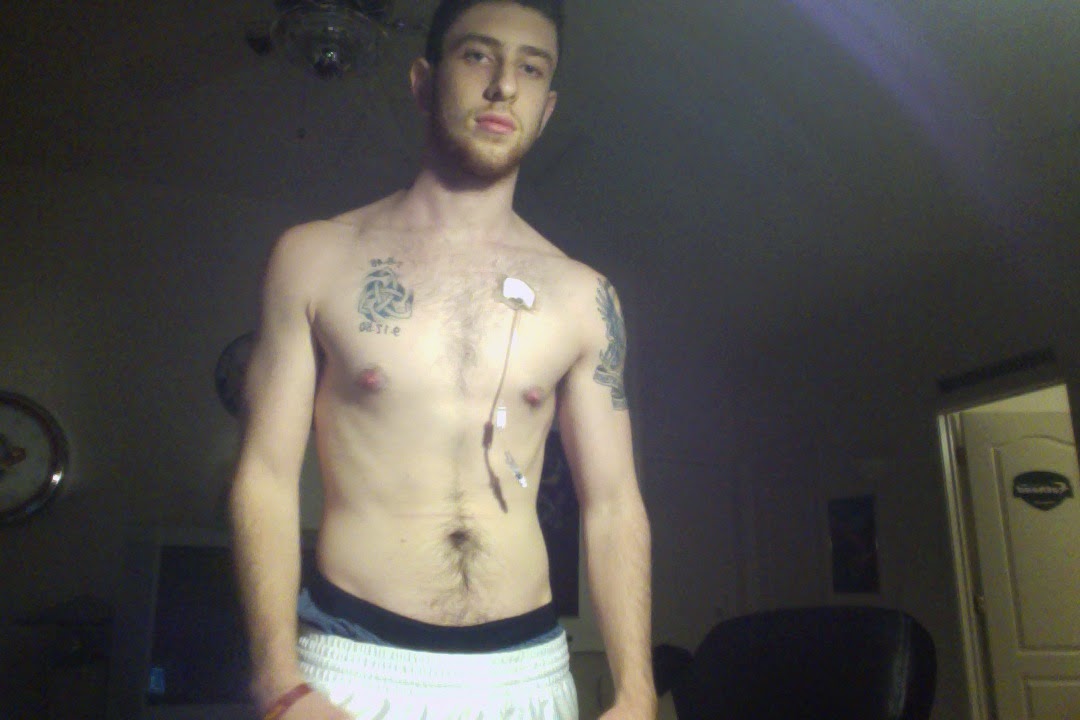
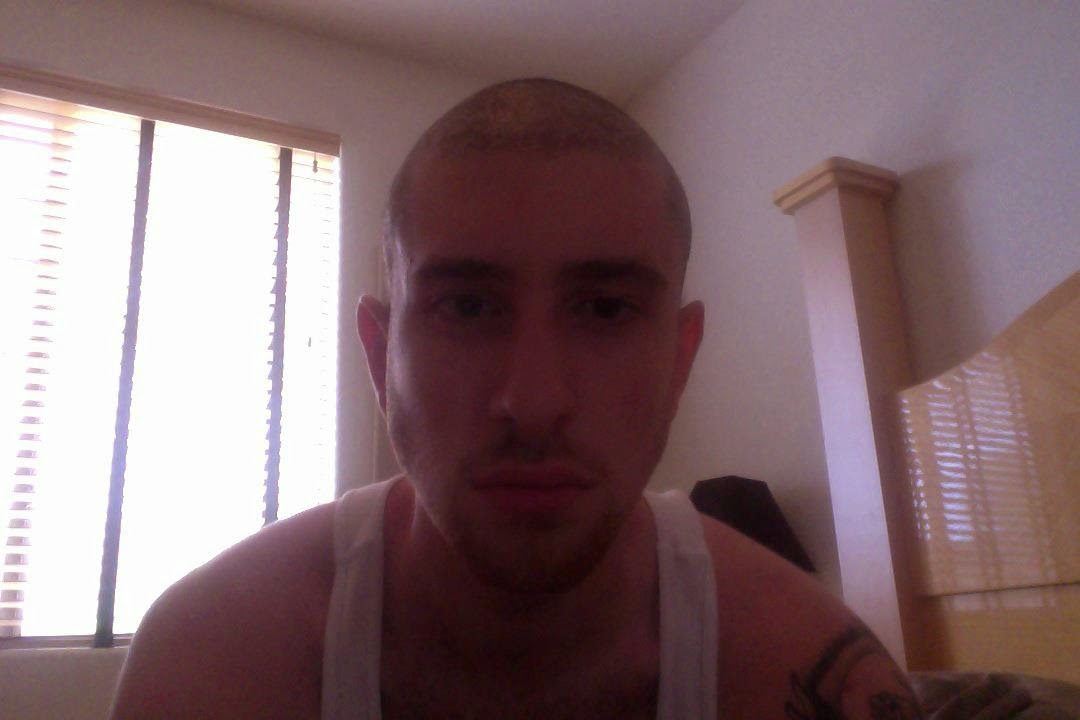
Right before I became ill at 185 Lbs.
At 145 Lbs only 9 months later. Still enduring grueling treatments.
 I remember the doctors. Each and every one. I remember when they initially thought I had HIV, then Chron's, then IBS, I could continue on, but the list wouldn't stop for some time. I remember after almost a year being told there was nothing it could be but cancer. Hodgkins Lymphoma. I remember the elation I felt with this prognosis. I also recall the shock on people's faces when they could see the excitement in mine at the prospect of cancer. I felt like I was dying, at least now there was a chance I would get better. Life is all relative, no one wants cancer, but when you're suffering immensely every day, and someone tells you theres a possible solution, you can't help but feel joy. I remember the bone marrow biopsy, the spinal tap, the exams. I remember the doctor coming in and saying it was negative. I remember the words, "Your body is shutting down, we dont know why. Sorry." I remember being handed anti-depressants to help me through my "tough" situation. I remember breaking down into tears.

I remember the Lyme Diagnosis. I remember somehow finding the energy to leap out of my seat and give her the biggest hug I've ever given anyone. I now remember the look on her face, the half smile that spoke to her happiness but also to her fear that I had no idea what I was in for. I remember her telling me weeks later that I would've been better off with HIV, that the medical community was too far behind on Lyme. I remember the fear that had disappeared weeks earlier, suddenly creeping back in. I remember not getting better. I remember feeling like I was back at square one. I remember being hopeless.

I remember the deaths. The people who were too young to die, those that were once in my life, that suddenly weren't. I remember feeling guilty. I remember feeling worthless, I wasn't a good friend, I wasn't as good of a person as any of them. I remember feeling it should've been me, not them. I remember the calls to 1-800-SUICIDE. I remember thinking once again, how did I get here. I remember wanting to end it all, I remember the plans, I remember it all. I remember straggling into my car with all the fatigue, plotting plans, but then simply driving off to admit myself into a psychiatric clinic. "Not yet," I told myself. I had to hang on just a little bit longer.

I remember sitting in the psychiatric ward. Sitting in teal scrubs beside a man repeatedly talking to himself. I remember another man across the room tatted head to toe on the phone discussing it was another drug charge and he assaulted someone. I remember the staff looking at me as if I were vastly inferior to them. I remember agreeing. I remember meeting with the psychiatrist on staff. I remember her eyes filled with empathy, "You dont belong here. You're physically ill, not mentally. They need to figure out whats wrong with you. I really wish I could help." I remember going home, and I remember the worry that ensued within my family.

I remember learning about the stigma behind Lyme Disease. I remember realizing that most doctors thought the illness I was given, didn't exist. I had been duped by quack doctors or I was faking it. I remember the aggression and rage that began to rise within. I remember not understanding, "How could they ignore this, how could they let people suffer like this?" I remember telling friends who were aspiring medical students about my situation and the empathy they felt. I remember after going to classes, some of those same medical students suddenly telling me I was wrong. I should be ok by now, and if I'm not then it's something else. I remember realizing this was a vicious cycle, this wasn't going to end anytime soon.

I remember going to a medical facility called Envita out of desperation. I remember the weird treatments that were making me better. I remember the relief I felt as there may be a way out of this. I remember not questioning that they didn't record anything, and the success rates they'd given me were clearly false. I remember ignoring how uncomfortable I felt when it seemed like the staff felt as if their methods were the best and untouchable, all due to some higher calling from God, and were sent on a mission to make us better. I remember the narcissism in the man who ran it, I remember getting worse after suddenly getting better. I remember pleading with my doctor to help me and him stating, "I don't know." I remember him telling me that I had a spell cast upon me while I was working in Africa and I needed to use the power of Jesus and also get an exorcism if I ever hoped to be well. I remember clenching a fist and a fire burning throughout my body as I was prepared to launch myself at the man I had entrusted my life to for six months. I remember somehow collecting myself and walking out. I remember feeling like it was all over.

I remember the family I met at Envita who was gracious enough to offer their home in Virginia to me and a doctor who'd help me get well. I remember flying out, wondering if it was all worth it, I had endured enough. I remember sitting in a hyperbaric oxygen chamber, and recovering faster than I ever thought possible. I remember hitting a wall in my recovery that I couldn't get past soon after. But I also remember feeling human again, I remember the thoughts of ending it all finally disappearing. 

I remember meeting my girlfriend. I remember the feeling I felt within. My heart raced, my eyes stayed fixed on her. I didn't know exactly what to say. I remember being extremely nervous. I remember the connection that ensued, the feelings that had risen in me that I had never experienced before. I remember questioning it. I remember feeling its too good to be true, I remember the confusion. I remember spending time with someone who knew what I was going through, someone who had experienced it herself. I remember not feeling alone for the first time in years, I remember falling in love.

I remember seeing her healthy, vibrant as ever. I remember the jumping jacks in the room, and the smiles that never seemed to fade away. I also remember feeling her pain. I remember watching her slowly get worse as she didn't have the finances to stay on the medications she needed. I remember screaming to myself, "Why isn't our care covered under medical insurance." I watched her lose part of herself. I watched as I also lost a part of myself. I watched her deterioration as she withered under the fists of this illness. I remember feeling I'd rather it be me, not her. I remember realizing what it's like to care about someone more than yourself.

I remember feeling what it's like to be close to wellness, but not there yet. I remember the PTSD that's followed this destruction, the type that I thought was only reserved for those in the armed forces. I remember still being scared, but knowing that I'm with a new doctor in New York who's pushed me past that wall I hit and that I'll feel wellness soon enough. I remember being hardened by Lyme to the point that the diagnosis of Type 1 Diabetes hardly bothered me. If I could endure Lyme, than Diabetes would pale in comparison.

I remember the vast amount of friendships I lost. I remember feeling out of touch with others my age. I remember feeling like I was 19 and 80 at the same time, though I'm 23. I hadn't matured much after the point I became ill, but I've also been through more than someone should realistically go through in an entire lifetime. I remember feeling like I want to help those with this insidious disease, but I'm also afraid that my identity will always be tied into that guy that was sick. I remember wanting to be more than just my illness.

I remember all this not even being the worse part of this experience.

I remember hearing hundreds, even thousands of Lyme stories ten times worse than mine.

I remember sitting here, right now at this very moment, thinking when will the pain and suffering inflicted to all those with this illness ever stop. I remember thinking, "Life isn't fair."